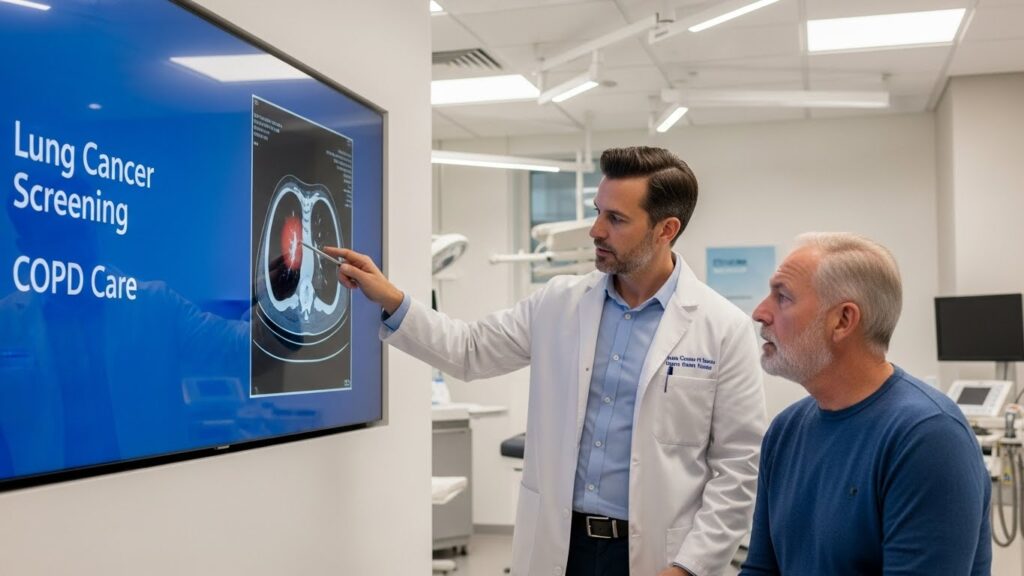
Early and accurate diagnosis plays an important role in protecting long term lung health. Many lung conditions begin with subtle symptoms, and patients often do not realize something is wrong until the issue becomes more serious. Advanced diagnostic tools help pulmonologists identify concerns sooner and provide targeted treatment. One of the most valuable tools in modern lung medicine is the EBUS procedure, a technique that allows doctors to examine the lungs and surrounding lymph nodes with a high level of accuracy. Patients in Glendale rely on specialists like Dr Ramyar Mahdavi to guide them through this process and offer expert pulmonary care.
What Is an EBUS and How It Works
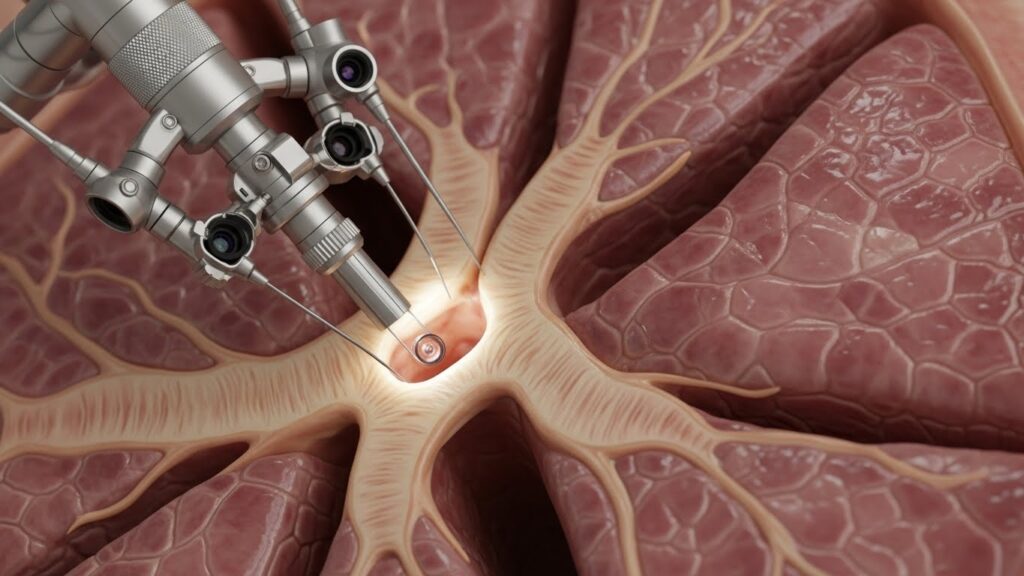
EBUS is short for endobronchial ultrasound. It is a minimally invasive test that combines bronchoscopy and ultrasound imaging. During the procedure, a thin flexible tube with a camera and ultrasound sensor is gently guided into the airways. The ultrasound provides a detailed view of structures that cannot be seen with a regular bronchoscopy alone.
This approach allows doctors to evaluate lymph nodes, detect abnormal tissue, and collect samples when necessary. Because it provides clear imaging in real time, the procedure helps confirm or rule out conditions with greater accuracy. Patients appreciate that EBUS is designed to be safe, comfortable, and effective.
When an EBUS Procedure Is Recommended
Doctors recommend an EBUS when they need more information about what is happening inside the lungs. One of the most common reasons is lung cancer screening and evaluation of lymph nodes. If imaging scans show enlarged nodes or a suspicious spot, EBUS allows the doctor to examine the area closely and collect a sample without surgery.
EBUS is also used to diagnose infections, inflammatory conditions, and other abnormalities that affect the lungs. It helps determine how advanced a condition is, which is important for planning treatment. Since the procedure is minimally invasive, patients usually experience much faster recovery compared to traditional surgical biopsies.
EBUS vs Traditional Diagnostic Methods
Traditional surgical biopsies require incisions and longer recovery times. EBUS provides a safer alternative because it uses natural airways to reach the needed areas. Most patients experience only mild discomfort, and the procedure is usually completed in a short period of time.
The precision of ultrasound imaging also improves accuracy. Doctors can visualize lymph nodes clearly, identify exactly where to collect tissue, and avoid unnecessary injury. For patients, this means fewer complications and quicker answers.
Conditions Commonly Evaluated with EBUS
Many lung conditions can be better understood with the help of EBUS. Lung cancer is an important example. The procedure allows doctors to check whether cancer has spread to nearby lymph nodes, which is necessary for determining the correct treatment plan.
Patients with chronic obstructive pulmonary disease may also need EBUS when symptoms change or when doctors need to rule out other problems. COPD affects airflow and the structure of the lungs, and sometimes additional evaluation is required to ensure the right diagnosis.
Pleural disease is another condition that may require closer examination. This includes infections, inflammation, or fluid buildup around the lungs. EBUS helps identify underlying causes and provides information that guides treatment decisions.
Why Choose a Pulmonologist in Glendale for EBUS
Choosing an experienced pulmonologist is essential when dealing with lung health. Dr Ramyar Mahdavi in Glendale provides advanced diagnostic care using modern tools and a detailed clinical approach. His training and experience allow him to perform EBUS procedures with precision, making the process comfortable and informative for patients.
Many patients trust Dr Mahdavi because he takes the time to explain procedures clearly, answer questions, and create personalized care plans. His office uses advanced technology to provide accurate results, making it easier for patients to understand their condition and begin treatment as early as possible.
Book Your Lung Evaluation with Dr Ramyar Mahdavi
If you need lung cancer screening, evaluation for COPD, or a closer look at possible pleural disease, an EBUS may provide the answers you need. Dr Mahdavi offers patient centered care and uses modern diagnostic tools to support early detection and effective treatment. Contact the office to schedule your lung evaluation and receive the expert guidance needed for better long term health.
FAQs
Is an EBUS procedure painful
Summary: Most patients experience only mild discomfort during an EBUS procedure.
Full answer: Most patients feel only mild discomfort during an EBUS procedure. Doctors usually perform the procedure with sedation to help ensure patient comfort throughout the test.
How long does an EBUS procedure take
Summary: An EBUS procedure typically takes between thirty and sixty minutes.
Full answer: The procedure usually takes between thirty and sixty minutes, depending on how many areas doctors need to examine or sample during the evaluation.
Does an EBUS procedure confirm lung cancer
Summary: EBUS allows doctors to collect tissue samples for further evaluation.
Full answer: EBUS allows doctors to take tissue samples from lymph nodes or other areas of concern. These samples are then analyzed to help confirm or rule out lung cancer.
What is the recovery time after an EBUS procedure
Summary: Recovery after an EBUS procedure is usually quick.
Full answer: Recovery is typically quick after an EBUS procedure. Most patients return home the same day and resume normal activities shortly afterward, depending on individual circumstances.
Is EBUS safer than a surgical biopsy
Summary: EBUS is a less invasive option compared to traditional surgical biopsy methods.
Full answer: EBUS is less invasive than a surgical biopsy because it does not require an external incision. It generally involves fewer risks and allows for a faster recovery compared to traditional surgical biopsy procedures.