What Pulmonary Function Testing Measures
Pulmonary Function Testing (PFT) is one of the most important diagnostic tools used by pulmonologists to assess how well your lungs are working. At Dr. Mahdavi’s Glendale office, these breathing tests measure airflow, lung capacity, and oxygen exchange — all crucial for diagnosing and managing respiratory conditions.
Lung Capacity and Airflow
PFTs measure how much air you can inhale and exhale, as well as how quickly you can breathe out. These results help identify airflow obstruction, which is common in conditions such as asthma and chronic obstructive pulmonary disease (COPD). If your results show reduced airflow, it may indicate narrowing or blockage in the bronchial tubes.
Gas Exchange and Diffusion
Another key aspect of PFTs is assessing gas exchange efficiency — how well your lungs transfer oxygen into the blood and remove carbon dioxide. This is measured through the diffusion capacity test (DLCO). Abnormal results may suggest damage to the alveoli (air sacs), as seen in pulmonary fibrosis or emphysema.
Common Types of PFTs
Spirometry, Plethysmography, DLCO
There are several kinds of pulmonary function testing in Glendale, each offering unique insights into lung performance:
- Spirometry: Measures the volume and speed of air you can inhale and exhale. It’s typically the first test performed and helps diagnose asthma and COPD.
- Plethysmography: Conducted in an enclosed chamber, this test determines total lung capacity and the amount of air remaining after exhalation. It’s useful for evaluating restrictive lung diseases.
- Diffusing Capacity of the Lungs for Carbon Monoxide (DLCO): This test assesses how efficiently oxygen moves from your lungs into your bloodstream. It helps detect conditions that impair gas exchange, such as pulmonary fibrosis or vascular disorders.
Each test provides complementary information that allows your Glendale pulmonologist to understand the complete picture of your respiratory health.
What Your Results Might Indicate
COPD, Asthma, Pulmonary Fibrosis
Pulmonary function test results are compared to predicted values based on your age, height, gender, and ethnicity. When values fall below the expected range, it may suggest:
- Chronic Obstructive Pulmonary Disease (COPD): Characterized by persistent airflow limitation. Spirometry often shows a low FEV1/FVC ratio.
- Asthma: Airflow obstruction that improves after using a bronchodilator, indicating reversible airway narrowing.
- Pulmonary Fibrosis: Reduced total lung capacity and diffusion capacity due to stiff, scarred lung tissue.
Your lung test results explained by a pulmonologist provide the foundation for diagnosis and treatment planning.
How PFTs Guide Pulmonary Treatment
Monitoring Disease Progression
PFTs aren’t only diagnostic — they’re essential for tracking disease progression. Regular testing allows your Glendale pulmonologist to monitor changes in lung function over time and determine whether your condition is stable or worsening.
Evaluating Therapy Effectiveness
If you’re undergoing treatment for asthma, COPD, or another pulmonary condition, periodic PFTs help assess how well medications and therapies are working. Improved test results may confirm effective management, while declining values can prompt timely treatment adjustments.
What to Expect at a PFT Appointment in Glendale
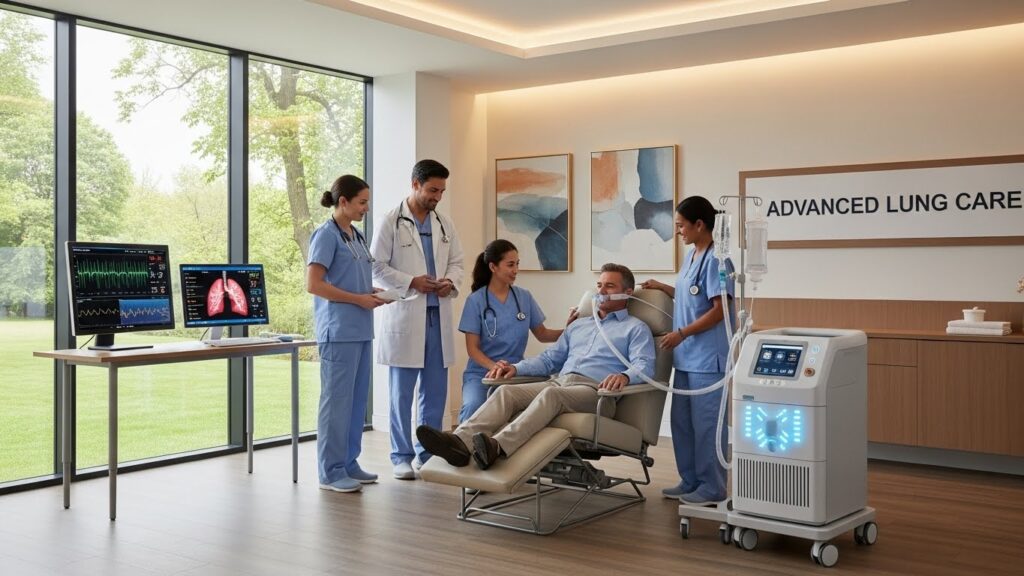
When you arrive for pulmonary function testing in Glendale, you’ll receive clear instructions before the test begins. You may be asked to avoid smoking or using certain medications for a few hours prior to testing.
During the test:
- You’ll breathe into a mouthpiece connected to specialized equipment.
- The technician will guide you through inhaling and exhaling as forcefully or deeply as possible.
- Some tests may require you to sit inside a clear booth to measure total lung volume.
The entire process usually takes 30–45 minutes and is noninvasive. Afterward, your pulmonologist will review the results, explain the findings, and discuss any necessary follow-up or treatment.
Schedule Pulmonary Function Testing
If you’ve been experiencing chronic cough, shortness of breath, or wheezing, it may be time to schedule a PFT in Glendale. Early testing allows for faster diagnosis and effective management of lung diseases.
Dr. Ramyar Mahdavi, a board-certified Glendale pulmonologist, provides comprehensive pulmonary function testing and advanced respiratory evaluations tailored to your specific needs. Book your appointment today to take the first step toward better breathing.
FAQ Section
Q1: What is a pulmonary function test (PFT)?
A PFT measures how well your lungs move air in and out and how efficiently they transfer oxygen into your blood. It’s a key test for diagnosing and monitoring lung diseases.
Q2: How should I prepare for a PFT in Glendale?
Avoid heavy meals, smoking, or using inhalers a few hours before the test unless instructed otherwise by your doctor. Wear loose, comfortable clothing for easier breathing.
Q3: Are pulmonary function tests painful?
No. PFTs are noninvasive and painless. You’ll simply breathe into a mouthpiece following your technician’s instructions.
Q4: How long does a pulmonary function test take?
Most tests take 30 to 45 minutes, depending on the number of tests performed.
Q5: What happens after I receive my lung test results?
Your pulmonologist will review your lung test results, explain what they mean, and discuss treatment or management strategies if any abnormalities are found.