Living with chronic obstructive pulmonary disease (COPD) does not have to mean giving up the activities you enjoy. The right physical therapy plan, often part of a structured pulmonary rehabilitation program, can improve exercise capacity, reduce shortness of breath, and help you feel more confident in daily life. At our clinic, we work closely with specialists to design safe, evidence-based programs tailored to each patient’s needs and goals.
Understanding COPD
Definition and symptoms
Chronic obstructive pulmonary disease is a progressive lung condition, most often caused by long-term exposure to cigarette smoke, that leads to airflow problems that cannot be fully reversed. COPD includes conditions such as chronic bronchitis and emphysema.
Typical symptoms include:
- Shortness of breath, especially with exertion
- Chronic cough and mucus production
- Wheezing or chest tightness
- Fatigue and decreased exercise tolerance
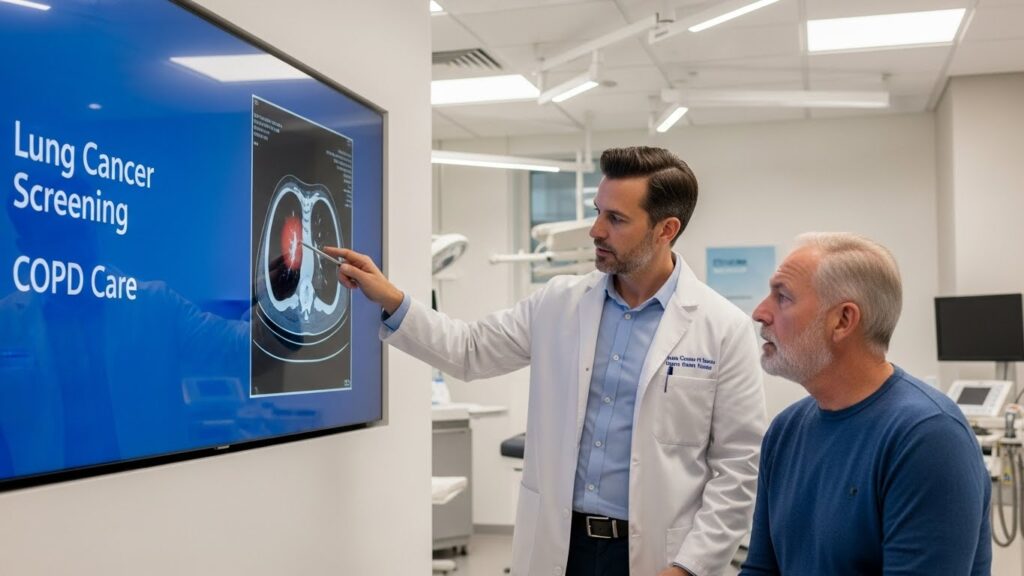
Diagnosis is usually confirmed with pulmonary function tests and may be supported by pulse oximetry or imaging.
Causes and risk factors
The strongest risk factor is smoking, but other contributors include secondhand smoke, air pollution, workplace exposure to dust or chemicals, and genetic factors such as alpha-1 antitrypsin deficiency. Repeated infections and environmental respiratory insults can also worsen the disease. Quitting smoking and reducing environmental exposure are essential to slowing disease progression.
Impact on daily life
COPD can significantly reduce physical activity levels, making even simple tasks exhausting. Many patients develop balance problems, weakness, or anxiety as breathlessness interrupts routine activities. Without intervention, this can lead to further deconditioning. Pulmonary rehabilitation and structured physical therapy directly address these challenges and improve quality of life.
Role of Physical Therapy in COPD
Benefits of physical therapy
Physical therapy is a cornerstone of COPD management. It helps patients regain exercise tolerance, build muscle strength, and control symptoms. Some of the major benefits include:
- Reduced shortness of breath
- Increased exercise capacity and stamina
- Better control of breathing muscles
- Improved confidence with stair climbing and daily chores
- Lower risk of hospitalizations
Goals of treatment
The main goals of physical therapy are to:
- Reduce breathlessness during physical activity
- Increase exercise tolerance and daily endurance
- Teach efficient breathing techniques such as diaphragmatic breathing and pursed-lip breathing
- Improve strength of respiratory muscles and limb muscles
- Encourage lifestyle changes including smoking cessation and improved nutrition
- Support medical treatments such as inhalers and oxygen therapy
Key Physical Therapy Interventions
Pulmonary rehabilitation programs
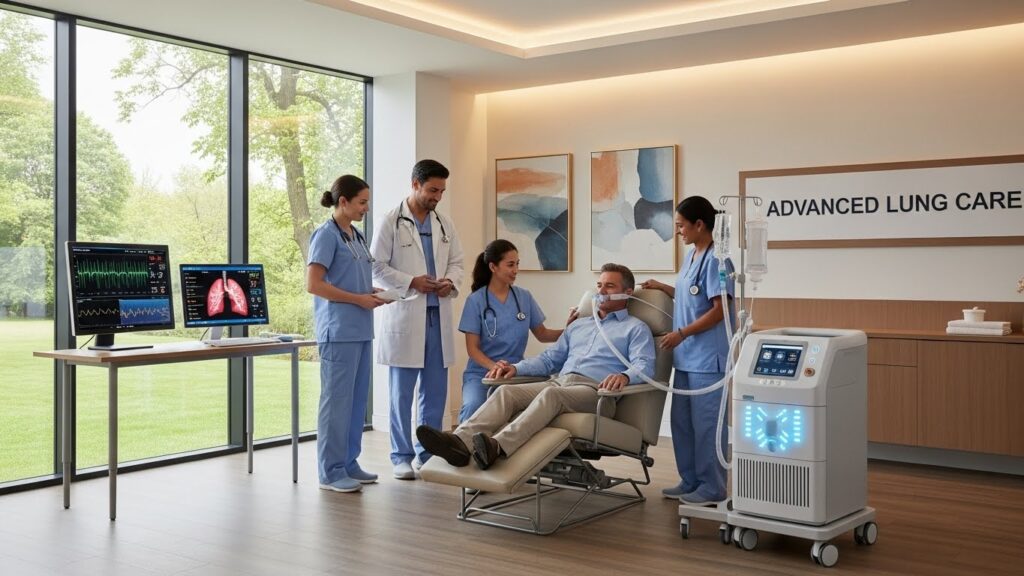
Pulmonary rehabilitation, sometimes called pulmonary rehab, is a comprehensive approach that combines supervised exercise training, education, and behavior change. It is delivered by a team that may include a respiratory therapist, exercise physiologist, nurses, and dietitians.
What to expect in a program:
- Assessment: Pulmonary function tests, pulse oximetry, walk tests, and muscle strength tests to set safe exercise levels.
- Supervised sessions: Aerobic and resistance training, along with breathing strategies.
- Education: Guidance on medications, recognizing flare-ups, and building a safe home exercise routine.
Breathing exercises
Breathing exercises are central to COPD management:
- Diaphragmatic breathing: Teaches patients to use the diaphragm, the main muscle used to breathe in, reducing accessory muscle strain.
- Pursed-lip breathing: Inhale through the nose and exhale slowly through pursed lips, making exhalation longer. This keeps airways open and helps control shortness of breath.
Both techniques can be practiced during walking, lifting, or stair climbing to maintain control.
Aerobic exercises
Endurance training improves exercise tolerance and reduces symptoms:
- Walking outdoors or on a treadmill
- Cycling or using a recumbent bike
- Interval training with rests as needed
Patients are often guided by the Borg scale of exertion, aiming for a moderate effort. Pulse oximetry is used to monitor oxygen levels, and oxygen therapy may be prescribed to keep saturation within safe ranges. Over time, the goal is to build up to 30–45 minutes of activity most days of the week.
Resistance training exercises
Strength training helps preserve independence and reduce fatigue:
- Use of resistance bands, free weights, or body-weight movements
- Focus on legs, arms, and trunk muscles for daily tasks such as standing, carrying, and stair climbing
- Stretching exercises to maintain flexibility
- Manual techniques and posture training to ease chest tightness
Patients can progress safely with minimal equipment at home while maintaining results from supervised sessions.
Managing COPD Symptoms
Breathing techniques for daily activities
Patients are taught how to use breathing strategies during everyday tasks:
- Exhale during effort, such as lifting or climbing
- Use forward-leaning positions to relieve respiratory muscles
- Apply pacing and planning to avoid sudden exertion
- Monitor exertion with the Borg scale to prevent flare-ups of shortness of breath
Sputum clearance methods
For patients with mucus production, clearance techniques may be added:
- Active Cycle of Breathing Technique (ACBT)
- Huff coughing, which clears airways without forceful coughing
- Manual techniques such as chest vibrations or percussion
- Maintaining hydration to thin secretions
Supporting Lifestyle Changes
Smoking cessation and its impact
Smoking cessation programs are vital for slowing the progression of COPD. Quitting smoking improves oxygen use, reduces inflammation, and boosts exercise capacity. Even long-term smokers notice benefits within weeks of quitting.
Nutritional advice and hydration
A healthy diet supports energy levels and reduces strain on the lungs. Smaller, nutrient-dense meals can reduce bloating that worsens breathlessness. Adequate hydration helps keep mucus thinner and easier to clear. Nutrition counseling may be integrated into pulmonary rehab programs.
Educational Support in Physical Therapy
Managing breathlessness
Education focuses on strategies to manage symptoms:
- Using pursed-lip and diaphragmatic breathing during exertion
- Understanding when oxygen therapy should be used
- Recognizing early signs of exacerbations
- Knowing when to seek medical help for worsening symptoms
Self-monitoring and symptom tracking
Patients are encouraged to track their progress at home:
- Recording walking distance or recumbent bike time
- Using step counters or activity monitors
- Monitoring oxygen levels with pulse oximetry
- Checking intensity with the Borg scale
- Repeating pulmonary function tests at follow-up appointments
Long-term Management and Maintenance
Consistency in therapy programs
Consistency is key for long-term success. After completing a structured rehab program, patients transition to home exercise routines using minimal equipment such as resistance bands or light weights. Community classes or periodic rehab sessions may provide additional support.
Monitoring progress
Regular check-ins help track changes in exercise tolerance, muscle strength, and oxygen needs. Adjustments to medications or oxygen therapy may be made based on ongoing assessments.
Adapting exercises over time
Programs are adapted to life events, seasons, or health changes:
- Shifting activities indoors during periods of high air pollution
- Using lighter exercise routines after flare-ups or respiratory insults
- Maintaining physical function even while preparing for advanced treatments such as a lung transplant
Conclusion: The Importance of Physical Therapy in COPD Management
Physical therapy is a proven and essential component of COPD care. By combining pulmonary rehabilitation, structured exercise programs, and lifestyle support, patients can achieve meaningful improvements in exercise tolerance, symptom control, and overall quality of life.
If you are living with chronic obstructive pulmonary disease and struggling with shortness of breath or reduced exercise capacity, physical therapy offers a path to regain control. Through personalized interventions, education, and consistent support, it is possible to breathe easier, stay active, and enjoy a more independent life.