Why Early Detection of Lung Cancer Matters
Survival Rates Improve with Early Diagnosis
Lung cancer remains one of the most serious and life-threatening cancers, yet its outcome depends heavily on how early it is diagnosed. When detected in its earliest stages, treatment options are more effective, survival rates improve, and patients often have more choices for less invasive interventions. Unfortunately, many patients dismiss early warning signs as minor respiratory problems, delaying diagnosis until the disease is advanced.
By recognizing the early signs of lung cancer and seeking timely evaluation with a Glendale pulmonologist, you give yourself the best possible chance for effective treatment.
Common Risk Factors for Lung Cancer
Not everyone with lung cancer has a history of smoking, but tobacco remains the strongest risk factor. Other contributors include:
- Exposure to secondhand smoke
- Long-term air pollution or occupational exposure (such as asbestos or diesel exhaust)
- Family history of lung cancer
- Radon gas exposure
- Underlying chronic lung diseases such as COPD or pulmonary fibrosis
If you have one or more of these risk factors, staying alert to symptoms and scheduling lung cancer screening in Glendale can be lifesaving.
Early Symptoms Patients Should Watch For
Persistent Cough and Chest Pain
One of the earliest and most common signs of lung cancer is a chronic cough that lingers for more than a few weeks. This cough may be dry, or it may produce phlegm. If you also notice chest pain that worsens when breathing deeply, coughing, or laughing, it may be a red flag requiring immediate attention from a pulmonologist in Glendale.
Coughing Up Blood or Wheezing
Coughing up even a small amount of blood (hemoptysis) should never be ignored. Wheezing or a whistling sound while breathing can indicate airway obstruction, possibly caused by a tumor pressing against or narrowing the airways. While wheezing can also result from asthma or other conditions, persistent symptoms call for advanced evaluation.
Unexplained Weight Loss and Fatigue
Sudden, unexplained weight loss and ongoing fatigue may indicate that the body is fighting an underlying condition such as lung cancer. These general symptoms are often overlooked, but in combination with respiratory issues, they warrant a lung specialist’s evaluation.
How Pulmonologists Detect Lung Cancer Early
Lung Cancer Screening (Low-Dose CT)
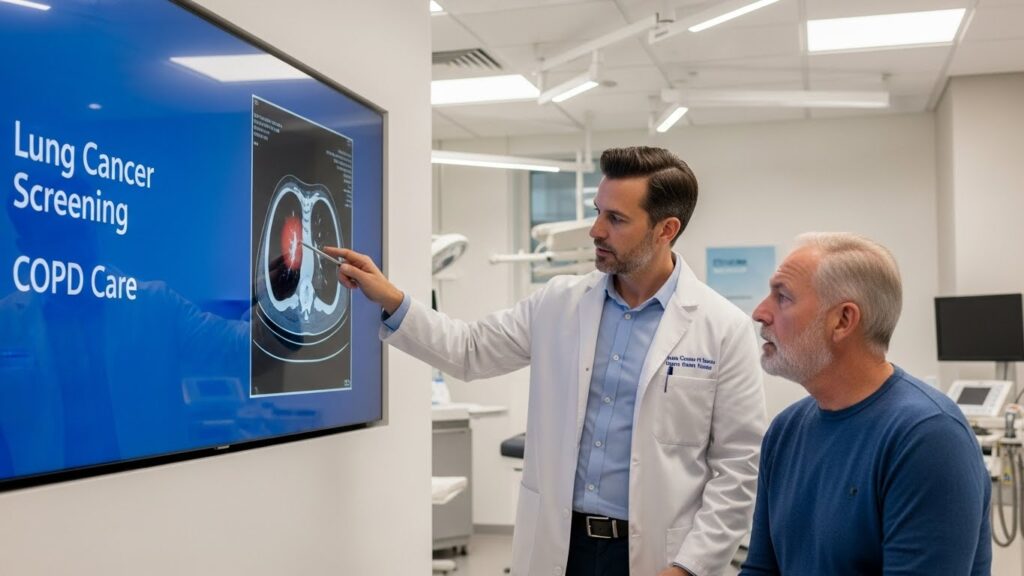
For high-risk individuals—especially adults with a history of heavy smoking—lung cancer screening with low-dose CT scans is the standard of care. Unlike X-rays, CT scans can detect very small nodules in the lungs, often before symptoms even appear. At Dr. Mahdavi’s Glendale office, screening is tailored to your risk factors and medical history.
Robotic Bronchoscopy for Nodule Biopsy
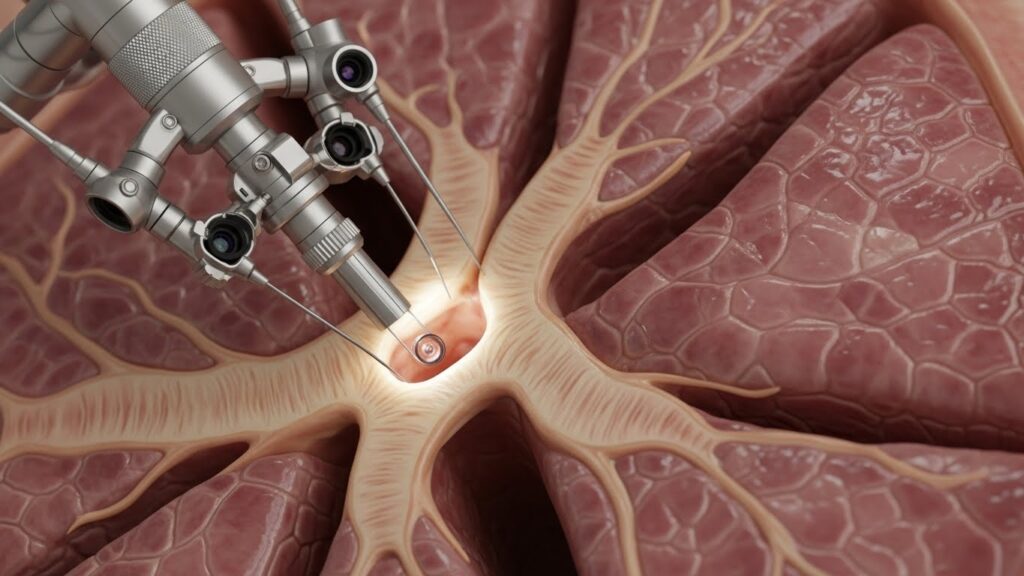
When imaging detects suspicious nodules, advanced technology such as robotic bronchoscopy allows for precise biopsy. This minimally invasive method helps pulmonologists collect tissue samples safely, leading to faster and more accurate diagnosis. Early biopsy and diagnosis are essential for creating an effective treatment plan.
When to Schedule an Evaluation in Glendale
If you experience any of the early warning signs—persistent cough, coughing up blood, chest discomfort, or unexplained fatigue—it’s time to schedule an appointment. Even if you are unsure, getting evaluated by a Glendale pulmonologist can rule out serious conditions and give you peace of mind.
Dr. Mahdavi offers comprehensive lung cancer screening in Glendale, including low-dose CT scans, pulmonary function tests, and advanced diagnostic procedures. Don’t wait until symptoms progress—early action can save lives.
Book a Lung Cancer Screening with Dr. Mahdavi
Your lungs are vital to every breath you take. If you are at risk or experiencing early signs of lung cancer, schedule a consultation with Dr. Ramyar Mahdavi, Glendale pulmonologist, today. With advanced diagnostic tools and a personalized approach, Dr. Mahdavi ensures you receive the care you need as early as possible.
FAQ Section
Q1: What are the earliest signs of lung cancer?
Persistent cough, chest pain, coughing up blood, wheezing, unexplained weight loss, and fatigue are among the earliest signs of lung cancer.
Q2: Who should get screened for lung cancer?
Individuals over 50 with a history of smoking or significant exposure to risk factors such as asbestos, secondhand smoke, or radon should consider lung cancer screening in Glendale.
Q3: How accurate is a low-dose CT scan for lung cancer?
Low-dose CT scans are highly effective at detecting small nodules that standard X-rays may miss, making them the preferred method for early lung cancer screening.
Q4: Is every persistent cough a sign of lung cancer?
No, persistent coughs can also be caused by infections, asthma, or COPD. However, when combined with other risk factors, a cough lasting more than a few weeks should be evaluated.
Q5: Why see a pulmonologist instead of a general doctor?
Pulmonologists specialize in lung diseases and have access to advanced diagnostic tools such as robotic bronchoscopy and low-dose CT, allowing for earlier and more precise detection.